
Top 10 Interview Tips for Pakistani Job Seekers 2026
My cousin Bilal spent three months preparing for a government job interview. He memorized every possible question, read books, watched YouTube videos, and even practiced in front of a mirror every night. When the day finally came, he walked into that room, sat down, and completely froze when the interviewer asked him one simple question.
“Tell me about yourself.”
He had prepared everything except that. He stumbled, repeated himself, and walked out knowing he had blown it. That was two years ago. Today he works at one of the top companies in Lahore because he spent those two years actually learning how interviews work in Pakistan not just memorizing answers.
If you are about to face an interview in 2026 and you want real advice that actually works in the Pakistani job market, this is for you. Not textbook advice. Real stuff.
1. Research the Organization Like You Already Work There

- Before your interview, you should know the organization so well that you could talk about it for five minutes without stopping. Most Pakistani candidates show up knowing only the name of the company and nothing else. That is a mistake that costs people jobs every single day.
- For corporate roles, check the company’s profile on LinkedIn before the interview — it shows you current team size, recent news, and sometimes even the interviewer’s own profile.
- Go to the official website. Read their mission statement. Find out when they were established. Know their key departments. If it is a government organization like FPSC or PPSC, read their latest annual report. If it is a private company, check their social media pages and recent news.
- When an interviewer asks “What do you know about us?” and you give a detailed, accurate answer, something shifts in the room. They sit up a little straighter. They start taking you seriously. It takes maybe 30 minutes of research but it creates an impression that lasts the entire interview.
- If you are actively looking for jobs right now, browse our latest Government Jobs in Pakistan 2026 to find verified opportunities that match your qualifications.
2. Dress for the Job You Want, Not the Weather Outside
- This might sound shallow but it matters more than most people admit. Pakistan is hot for most of the year and a lot of candidates show up in interviews looking visibly uncomfortable in their formal clothes. That discomfort shows on your face and in your body language.
- Buy one good interview outfit and wear it around the house a few times before the actual interview. Get used to it. Iron it the night before. Polish your shoes. Make sure everything fits properly.
- For men, a plain shalwar kameez with a waistcoat works perfectly well for most Pakistani government and private sector interviews. A well-fitted suit works great for corporate roles in Karachi, Lahore, or Islamabad. For women, a neat and modest formal dress or shalwar kameez in a plain color is always the right choice.
- When you look put together, you feel more confident. That confidence is worth more than any answer you could memorize.
3. Actually Prepare for “Tell Me About Yourself”
- This is the question that trips up Bilal and thousands of other candidates every year. It feels easy because it is about you. But that is exactly why people blank out or ramble.
- Write out a two minute answer. Include your educational background, one or two key achievements, what you are currently doing, and why you are excited about this specific opportunity. Practice it out loud until it feels natural, not rehearsed.
- The goal is not to recite your CV. The goal is to give the interviewer a reason to keep listening to you.
What Interviewers Notice First in Pakistani Job Interviews
Based on recruiter feedback Pakistani job market 2026
82%
76%
71%
68%
59%
Source: These are general estimates based on commonly cited recruiter
observations, not a formal survey.
4. Prepare Questions to Ask Them
- Almost every interview in Pakistan ends with “Do you have any questions for us?” and almost every candidate says “No, thank you.” That is a missed opportunity every single time.
- Prepare two or three genuine questions. Ask about the team you would be working with. Ask about what success looks like in this role after six months. Ask about training or growth opportunities. These questions show that you are serious, that you have thought about this role beyond just getting a salary, and that you are genuinely interested in contributing.
- One thing to avoid do not ask about salary or leave allowances in the first interview. It gives the wrong impression before they have even decided they want you.
5. Speak Clearly and at a Normal Pace
- Nerves make people speak too fast. When you speak too fast in an interview, you sound anxious and the interviewer misses half of what you say. Then they ask you to repeat yourself and the cycle of nervousness gets worse.
- Before your interview day, practice speaking at 70 percent of your normal speed. Record yourself on your phone and listen back. You will probably be surprised at how fast you were actually talking.
- In the interview room, take a breath before answering each question. It is perfectly acceptable to say “That is a great question, let me think for a moment” before responding. That pause makes you look thoughtful, not unprepared.
6. Handle the Salary Question Properly
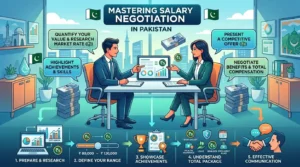
- This is where a lot of otherwise strong candidates make serious mistakes. When asked about salary expectations, most people either say a number that is too low because they are afraid of rejection, or too high because they googled market rates without context.
- Before your interview, research the typical salary range for that specific role in that specific city. Sites like Glassdoor, LinkedIn, and Rozee.pk give you real data. Then give a range rather than a single number. Something like “Based on my research and experience, I am expecting somewhere between 80,000 and 100,000 rupees, though I am open to discussion.”
- Use Rozee.pk to research realistic salary ranges for your specific role and city before the interview so your expectations are grounded in actual market data.
- That approach shows you have done your homework, you know your worth, and you are reasonable to work with.
- To understand what salary packages look like in different sectors, check our Private Sector Jobs and Hospital Jobs listings which include salary details where available.
Average Starting Salary by Sector — Pakistan 2026
Monthly salary in Pakistani Rupees (PKR)
PKR 80,000 to 150,000
PKR 60,000 to 120,000
PKR 55,000 to 100,000
PKR 45,000 to 90,000
PKR 25,000 to 55,000
Source: These are general estimates based on publicly available salary
trends, not official data.
7. Body Language Speaks Before You Do
- When you walk into the interview room, the panel has already formed an impression of you before you open your mouth. The way you walk in, shake hands, sit down, and make eye contact tells them a story about your confidence and professionalism.
- Walk in with your back straight. Shake hands firmly but not aggressively. Sit properly do not slouch, do not sit on the edge of the chair like you are about to run away. Make eye contact with the person asking the question but also acknowledge the other panel members occasionally.
- Do not cross your arms. It makes you look defensive. Keep your hands on the table or in your lap. Nod when the interviewer is speaking to show you are listening.
- These small things are not small at all. They are the difference between someone who feels trustworthy and someone who does not.
8. Be Honest About What You Do Not Know

- One of the biggest mistakes candidates make is trying to fake an answer when they do not know something. Interviewers in Pakistan have seen this thousands of times and they can tell immediately.
- If you do not know the answer, say so clearly and then show your willingness to learn. Something like “I am not completely certain about that, but based on what I know I would approach it this way, and I would research further to make sure.” That kind of honest answer combined with a genuine attempt actually impresses most interviewers far more than a confident wrong answer.
- Nobody expects you to know everything. They expect you to be honest and coachable.
9. Follow Up After the Interview
- This is something almost no Pakistani candidate does and it can genuinely set you apart. After your interview, send a short email or message to the HR contact thanking them for the opportunity, expressing your continued interest in the role, and mentioning one specific thing from the conversation that excited you about the position.
- Keep it short. Four or five sentences maximum. Send it within 24 hours of the interview.
- Most hiring managers remember the candidates who did this. It shows initiative, professionalism, and genuine interest three things every employer wants.
10. Learn From Every Interview, Win or Lose

- After every interview, whether you get the job or not, sit down and write out three things that went well and three things you want to improve. Be honest with yourself. Most people skip this step and then repeat the same mistakes in the next interview.
- If you do not get the job and the recruiter is open to it, ask for brief feedback. Not all will respond but some will and that feedback is genuinely valuable. Bilal got rejected from seven interviews before he landed his current job. But he treated each rejection as a lesson and each time he walked in a little better prepared than before.
- The candidates who improve the fastest are not the most talented ones. They are the ones who pay attention, reflect honestly, and keep showing up.
Common Mistakes Pakistani Job Seekers Make in Interviews
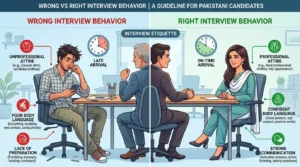
- Arriving late is still one of the most common and most damaging mistakes. Arrive at least 15 minutes early. Use Google Maps the day before to figure out the route and how long it actually takes.
- Bringing an unprepared CV is another major issue. Your CV should be updated, clean, and free of spelling errors. Print at least three copies and carry them in a folder.
- Talking negatively about previous employers is something that immediately raises red flags. Even if your last job was a nightmare, find a professional and respectful way to talk about it.
- Not practicing out loud is perhaps the biggest mistake of all. Reading answers in your head is completely different from saying them out loud in a room full of people. Practice with a family member, a friend, or even just by yourself out loud. It makes a real difference.
Most Common Interview Mistakes — Pakistani Job Seekers 2026
Percentage of candidates making each mistake
91%
78%
73%
65%
61%
44%
Source: These are general estimates based on commonly observed patterns,
not a formal survey.
Before You Go
Pakistan’s job market in 2026 is competitive but it is full of opportunity for the people who prepare seriously and present themselves well. The interview is not just a test of your knowledge. It is a test of how you communicate, how you carry yourself and how you make the person across the table feel about working with you every day.
Bilal got his job not because he was the most qualified candidate in the room. He got it because he was the most prepared, the most genuine, and the most memorable. You can be that person too.
Now go prepare like you actually want it.
Start your job search today by visiting our complete jobs listings page where you will find verified opportunities across all sectors, updated daily.
Frequently Asked Questions (FAQs):
How should I answer "Tell me about yourself" in a Pakistani job interview?
Write a two minute answer in advance and practice it out loud. Start with your educational background, mention one or two real achievements, explain what you are currently doing, and finish by saying why you are genuinely interested in this specific role. The goal is not to recite your CV. The goal is to give the interviewer a reason to keep listening to you. Keep it focused, confident, and under two minutes.
Should I follow up after a job interview in Pakistan?
Yes, and almost nobody does it, which is exactly why you should. Send a short professional email within 24 hours thanking the interviewer for their time, expressing your continued interest, and mentioning one specific thing from the conversation that genuinely excited you about the role. Keep it to four or five sentences. This simple step makes you memorable in a way that most candidates never are.
How should I handle the salary question in a Pakistani interview?
Research the realistic salary range for your role and city on platforms like Rozee.pk and LinkedIn before you go in. When asked, give a range rather than a single number. For example say something like "Based on my research and experience I am expecting between 80,000 and 100,000 rupees, though I am open to discussion." Avoid asking about salary yourself in the first interview as it creates the impression that money is your only motivation.
What documents should I bring to a job interview in Pakistan?
Bring at least three printed copies of your updated CV, your original educational certificates along with attested photocopies, your original CNIC and a photocopy, experience letters if you have previous work experience, and two recent passport size photographs with a white background. Keep everything organized in a clean folder. Walking in prepared with all documents shows professionalism before you have even said a single word.