

How to Apply for Government Jobs in Pakistan 2026 – Complete Guide
I still remember the day my friend called me from Multan, completely panicked. He had just found out about a PPSC advertisement and the last date was the next morning. He asked me to help him apply right away. We sat down together, opened the website, and within five minutes realized he was missing three documents, had no idea what a postal order was, and had never even heard of a domicile certificate.
That night went nowhere. The deadline passed. The opportunity was gone.
The frustrating part was not that he missed it. The frustrating part was that he was fully qualified for that job. He just had no idea how the process worked.
If you are reading this because you want to apply for a government job in Pakistan and feel confused about where to start, this guide is exactly what you need. I am going to walk you through the entire process the way I wish someone had explained it to me when I was starting out.
First Understand Where Do Government Jobs Actually Come From
Pakistan does not have one central place where all government jobs appear. This confuses a lot of people early on.
Federal government jobs are open to candidates from all over Pakistan. These are managed by FPSC which stands for Federal Public Service Commission. NTS which is the National Testing Service also conducts tests for many federal departments and autonomous bodies.
Provincial jobs are for residents of specific provinces. Punjab has PPSC, Sindh has SPSC, Khyber Pakhtunkhwa has KPPSC, and Balochistan has BPSC. Each one manages hiring for their own province.
Then there are autonomous bodies and departments like NADRA, WAPDA, Pakistan Railways, PIA, and PTCL. These organizations either hire directly or use NTS and OTS for testing.
Defence sector jobs including Pakistan Army, Navy, and Air Force have their own separate portals and selection processes entirely.
Understanding this matters because if you only check one source, you will miss dozens of opportunities that you are perfectly qualified for.
Step1: Finding the Right Job For You

Before you apply anywhere, get clear on what you are actually eligible for. Pull out your documents and check three things. Your highest educational qualification, your current age, and your domicile district.
These three things will immediately filter out most jobs and leave you with only the ones that actually apply to you. Applying for jobs you are not eligible for wastes your time, your money on fees, and honestly your confidence too.
Where to look for jobs:
The most reliable official sources are the FPSC website at fpsc.gov.pk for federal positions, and the NTS website at nts.org.pk for test based recruitment across many departments.
For daily updates, Jang, Dawn, and The News newspapers carry government job advertisements every single day. The Sunday edition of Jang in particular has the most extensive job listings of the week.
For a curated list of verified current jobs in one place, you can also check NextJobTop which keeps updated listings organized by category.
One practical thing I genuinely recommend is joining a few WhatsApp or Telegram groups that specifically share government job ads. Manually checking every website every day is not realistic. Notifications work much better.
Step2:Reading the Advertisement Properly
This sounds obvious but most people skip this step and pay for it later.
My cousin once applied for a job where the advertisement clearly said no third division throughout academic career. He had a third division in his Matric. He found out at the document verification stage after spending money on forms, photos, and a postal order.
Read every single line of the advertisement. Pay specific attention to these things.
- Post name and BPS grade. BPS stands for Basic Pay Scale. BPS 1 to 15 are generally lower to middle level positions. BPS 16 and above are officer level posts with significantly better pay and career growth.
- Minimum education required. Whether it is Matric, Intermediate, Graduation, or a Master’s degree, your qualification must match exactly. Many posts also specify the division or minimum percentage.
- Age limit. The most common age range is 18 to 30 years but this varies widely. Some posts allow up to 35 years. Always calculate your age against the date mentioned in the advertisement, not today’s date.
- Domicile requirement. Some jobs are specifically for residents of a particular province, division, or even district. Your domicile certificate must match what is required.
- Application deadline. Missing this by even one day means your application will not be accepted regardless of how qualified you are.
Step3: Getting Your Documents Ready
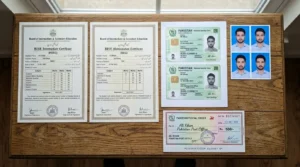
This is where being prepared in advance saves you enormous stress. Gather these docu
ments before you even start filling a form.
- CNIC or B Form: You will need attested photocopies. Attestation means getting a stamp and signature from a gazetted officer or a notary. Many banks also offer attestation services.
- Educational certificates: From Matric all the way to your highest degree. Every single one needs attested copies. Some departments ask for transcripts as well so keep those handy.
- Domicile certificate: This is issued by your Union Council or Tehsil office. It is free of charge but takes a few days to process. If you do not have one already, get one made now before you even start applying anywhere.
- Experience letter: Only if the job requires previous work experience. This must be on official letterhead from your previous employer.
- Recent passport size photographs: Keep at least eight to ten. They get used for forms, test day, and interview day. Make sure the background is white and the photo is recent.
- Postal order or bank draft: This is the application fee payment method for most government jobs. You get it from any Post Office or bank branch. The amount varies, typically between 200 and 1500 rupees depending on the post.
Step4: Filling Out the Application Form

Most government job forms today are submitted online. FPSC, NTS, PPSC, and most other major bodies have their own online portals where you register, fill your information, upload documents, and pay fees digitally.
Before you start filling any form online, do this one thing first. Open a notepad or grab a piece of paper and write down all your information. Father’s name, date of birth, CNIC number, Matric roll number, passing year, board name, marks obtained, total marks, domicile district, all of it. Having this in front of you means you fill the form without hesitation and without making errors.
- CNIC number: Deserves extra attention. One wrong digit and your form gets rejected. Type it, then check it against your actual card twice.
- Email address: Use one that you check regularly. Roll number slips, interview calls, and result notifications all go to this email. Using an email you barely open means you will miss critical updates.
- Photo upload: Online forms usually specify exact size requirements like 20KB to 50KB in JPG format. If your photo is too large, use a free online compressor before uploading.
For departments that still require physical forms, always send them by registered post. Keep the tracking number. A normal letter can get lost. Registered post gives you proof of delivery.
Step5: Preparing For the Written Test
A lot of people treat form submission as the finish line. It is actually the starting line.
The test is where most candidates are filtered out. And the test is very much winnable if you prepare the right way.
Government job tests in Pakistan generally cover these subjects.
- General Knowledge: covers current affairs both within Pakistan and internationally, geography, history, and occasionally science basics.
- Islamic Studies: covers basic beliefs, Quran, Hadith, and the life of the Prophet.
- Pakistan Studies: covers the Pakistan independence movement, the constitution, geography, and economic history.
- English: covers grammar rules, vocabulary, fill in the blanks, and comprehension passages.
- Mathematics: covers basic arithmetic, percentages, ratios, and sometimes basic algebra.
- Computer Knowledge: covers basic MS Office, internet usage, and email communication.
| NTS Government Job Test — Subject Weightage | ||
| Approximate marks distribution in a typical NTS MCQ test | ||
| General Knowledge | ||
| Pakistan Studies | ||
| English | ||
| Mathematics | ||
| Islamic Studies | ||
| Computer Knowledge | ||
| Source: Based on standard NTS test pattern. Actual weightage may vary by department. | ||
The single best preparation resource is past papers. NTS past papers are available on their official website nts.org.pk. Download the past papers for the specific type of test you are appearing in and solve them under timed conditions. This gives you a real feel for the format and difficulty level.
For General Knowledge and current affairs, reading a daily newspaper for even twenty minutes builds tremendous knowledge over a few months. Dawn newspaper dawn.com is particularly good for this purpose.
Buy a good NTS preparation guide from any bookshop. Caravan Books and JWT series are widely used and genuinely helpful for most government job tests.
Step6: Handling Test Day Correctly
The night before your test, keep everything ready. Admit card printed, original CNIC, two passport photos, and a pen.
Arrive at the test centre at least thirty minutes early. Test halls fill up fast and latecomers sometimes find parking, seating, and check in to be chaotic. You do not want to walk into an exam already stressed.
Read each question fully before answering. In MCQ tests, negative marking sometimes applies meaning a wrong answer deducts marks. Check whether negative marking applies to your specific test before you start attempting questions you are unsure about.
Step7: The Interview Stage
If you clear the test, you will be called for an interview. This is where a lot of people who performed well in the written test lose their chance because they were not prepared for this stage.
Dress properly: Formal shalwar kameez or a proper shirt and trousers, clean, pressed, and neat. First impressions in a government interview matter more than most people think.
Bring your original documents along with extra photocopies. They will verify everything on the spot.
Prepare answers to these questions before you walk in.
Tell us about yourself. Why do you want this job. What are your strengths. What do you know about this department. Where do you see yourself in five years.
These questions sound simple but candidates who have not thought about them beforehand fumble badly under pressure. Practice your answers out loud, not just in your head.
Do not ask about salary in a government job interview. The pay scale is fixed and bringing it up signals that you are only interested in money rather than the work itself.
Common Mistakes That Cost Good Candidates Their Chance

Over the years of watching people go through this process, these are the patterns that show up again and again.
- Filling the form on the last day: Websites crash, Post Offices run out of postal orders, and documents go missing. Start at least a week before the deadline without exception.
- Applying for jobs where age or education does not match: Rejection at document verification after months of waiting is demoralizing and completely avoidable. Read the eligibility criteria first every single time.
- Not bringing the admit card to the test: Without it, you will not be allowed into the test hall. Print two copies and keep one at home.
- Going to the interview without knowing anything about the department: Ten minutes of reading the organization’s website makes a visible difference in how you come across.
- Using an unprofessional email address as your official contact: Create a simple email with your actual name if you do not already have one.
- Giving up after one or two failed attempts: Almost every person working in a stable government job today failed at least once before getting selected. The people who keep going are the ones who eventually get in.
What Happens After You Get Selected
Once you clear the written test and interview, your documents go through a verification process. This includes confirming your educational certificates with the respective boards, verifying your domicile, and often a character certificate check through local police.
This process can take anywhere from a few weeks to several months depending on the department. Stay patient. Keep checking your email. Do not resign from any current job until you have the official appointment letter in your hand.
The appointment letter is the only document that confirms you have the job. Everything before that is progress, not confirmation.
Where to Find Today’s Latest Government Jobs
The best approach is to use multiple sources together rather than depending on just one.
Check fpsc.gov.pk and nts.org.pk regularly for federal and test based jobs . Check your provincial PSC website for provincial positions. Read a major newspaper at least a few times a week.
Visit NextJobTop.com for today’s latest verified government, army, navy, air force, and hospital jobs in Pakistan, updated regularly with complete application details
The opportunities are genuinely out there. Pakistan announces thousands of government vacancies every single year. The candidates who get selected are not always the most brilliant people in the room. They are the ones who were prepared, organized, and persistent enough to keep going.
Start with one job today. Read its advertisement completely. Gather your documents. Fill the form on time. Study seriously for the test. Show up prepared for the interview.
That is the complete formula. It is not complicated once you have done it once. The first time is always the hardest and after that it becomes second nature.
Frequently Asked Questions (FAQs):
What documents are required to apply for a government job in Pakistan?
Answer: The standard documents required for most government job applications in Pakistan include your original CNIC or B-Form with attested photocopies, educational certificates from Matric to your highest degree with attested copies, a domicile certificate issued by your Union Council or Tehsil office, recent passport size photographs with a white background, and a postal order or bank draft for the application fee. Some posts additionally require experience letters on official letterhead, character certificates from a gazetted officer, and department-specific forms. It is always best to prepare all these documents in advance before you start filling any application form.
Can I apply for multiple government jobs at the same time in Pakistan?
Answer: Yes, you can apply for multiple government jobs simultaneously as long as you meet the eligibility criteria for each one. There is no rule that restricts you from submitting applications to different departments or organizations at the same time. However make sure your age limit, educational qualification, and domicile requirements match each individual job advertisement before applying. Managing multiple applications also requires careful organization — keep separate files for each job with their respective roll number slips, test dates, and centre locations so nothing gets mixed up.
What subjects are tested in NTS and FPSC government job tests?
Answer: Most government job written tests in Pakistan cover a standard set of subjects regardless of the department. General Knowledge typically carries the highest weightage at around 25 percent and includes current affairs, Pakistan geography, and world history. Pakistan Studies covers the independence movement, constitution, and economic history at around 20 percent. English covers grammar, vocabulary, and comprehension at 20 percent. Mathematics covers arithmetic, percentages, and ratios at 20 percent. Islamic Studies covers basic beliefs and Quran at 10 percent. Computer Knowledge covers basic MS Office and internet use at around 5 percent. The exact weightage varies by department and post level so always check the official test syllabus for your specific job.
How long does the government job selection process take in Pakistan?
Answer: The complete government job selection process in Pakistan typically takes between three to eight months from the application deadline to the final appointment letter. After the written test results are announced, shortlisted candidates are called for interviews which can take another four to eight weeks depending on the number of candidates and the department. Document verification after the interview adds another two to six weeks. Some large-scale recruitments through FPSC or provincial service commissions can take even longer due to the volume of applicants. The key is to stay patient, keep checking your email regularly, and not resign from any existing position until you have the official appointment letter in your hands.